
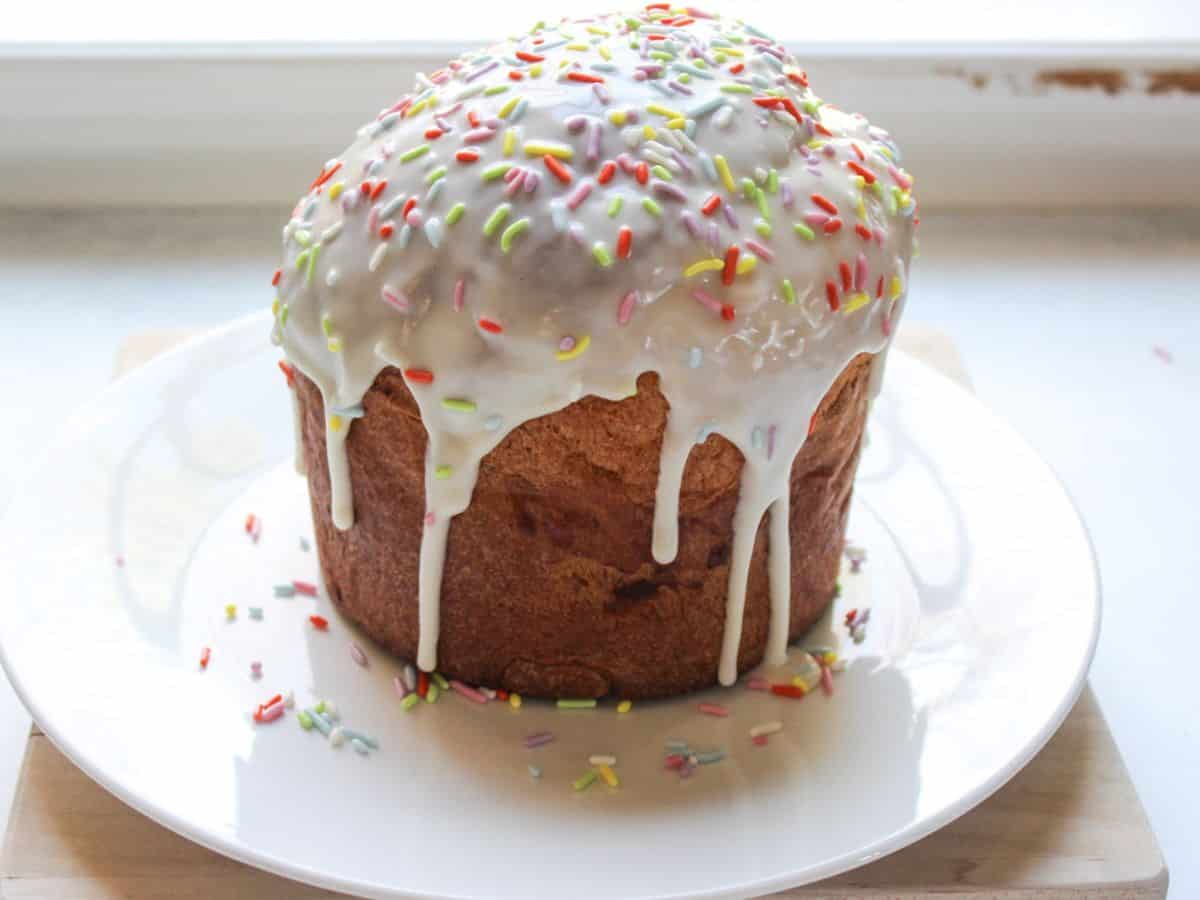
This traditional Ukrainian Easter Paska bread recipe is simple enough for beginners. It takes a little time and patience, but it's worth it for the classic soft, slightly sweet and rich Easter bread. You can enjoy it as it is or finish it with one of the glazes I share below.
About this Paska recipe
Over the years, I've adapted this recipe from late, but well-known Ukrainian cookbook author Daria Tsvyek. Living in the USA, I had to adjust some of ingredients to get the right texture and flavor, so the Paska tastes just little at home. This recipe is straightforward and stays true to the traditional way of making this Ukrainian Easter bread.
Nataliia
Ingredients overview
You can find the ingredients quantities in grams and US cups in the recipe card at the end of this post.
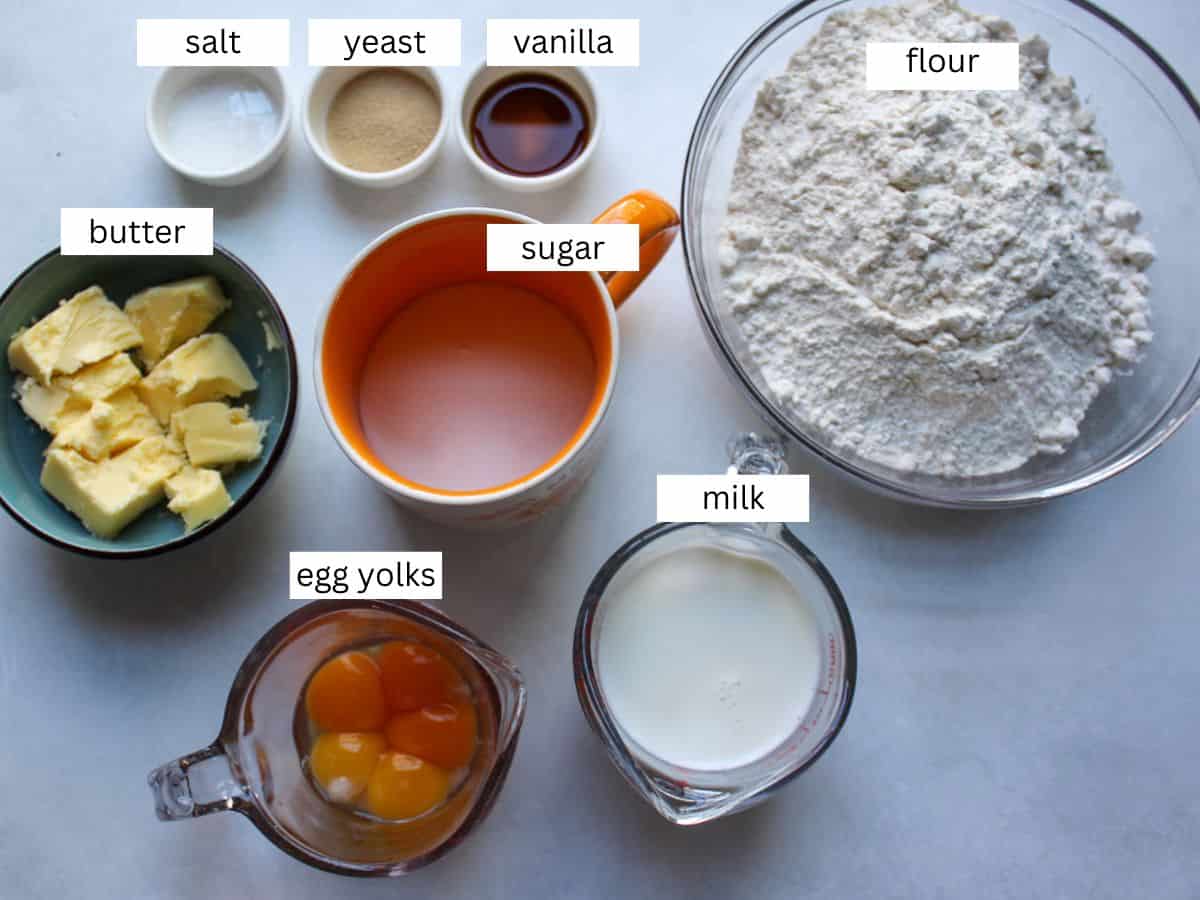
- Milk: I recommend using whole milk, but 2% will work too.
- Yeast: I used dry yeast, red star brand. Do not use fast acting yeast.
- Sugar: I used granulated sugar.
- Egg yolks: This recipe uses 5 egg yolks. You can also use 3 whole eggs, but yolks give richer bread. You can use egg whites for making the Paska glaze or meringue cookies.
- Butter: I used unsalted butter. It should be melted but not hot.
- Vanilla: you can use vanilla extract or paste.
- Salt: A little bit of salt for taste.
- Lemon zest: It is optional, but adds fresh flavor to the bread. You can also use orange zest instead.
- Flour: You will need all-purpose flour. I used Kings Author brand.
How to make Paska Easter bread
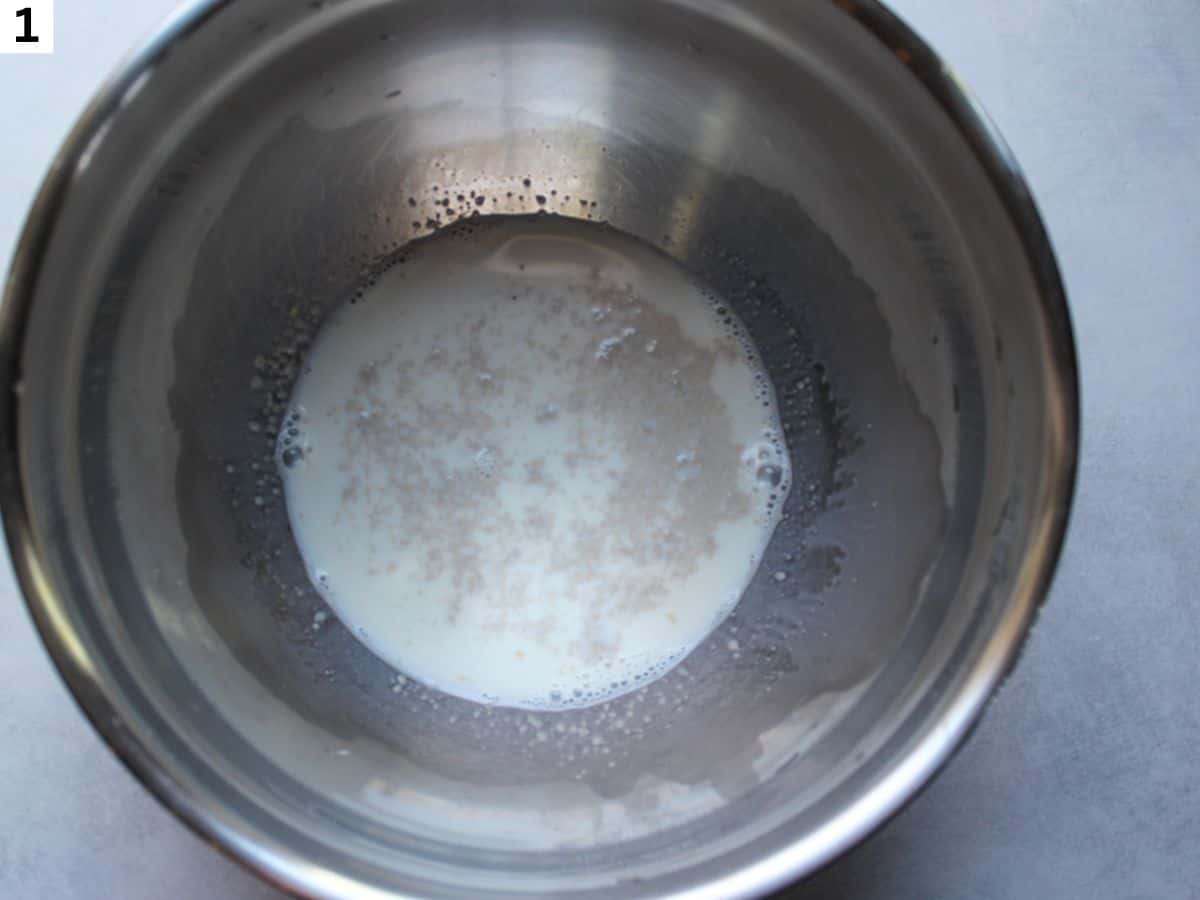
- Activate yeast. Add yeast to warm milk in a large bowl, and set aside for 10 minutes.
2. Mix eggs and sugar. Whisk egg yolks, sugar, vanilla, salt.

3. Combine all wet ingredients. Add egg mixture and melted butter to the activated yeast mix.

4. Add flour. Gradually add flour, until you have shaggy, sticky dough.
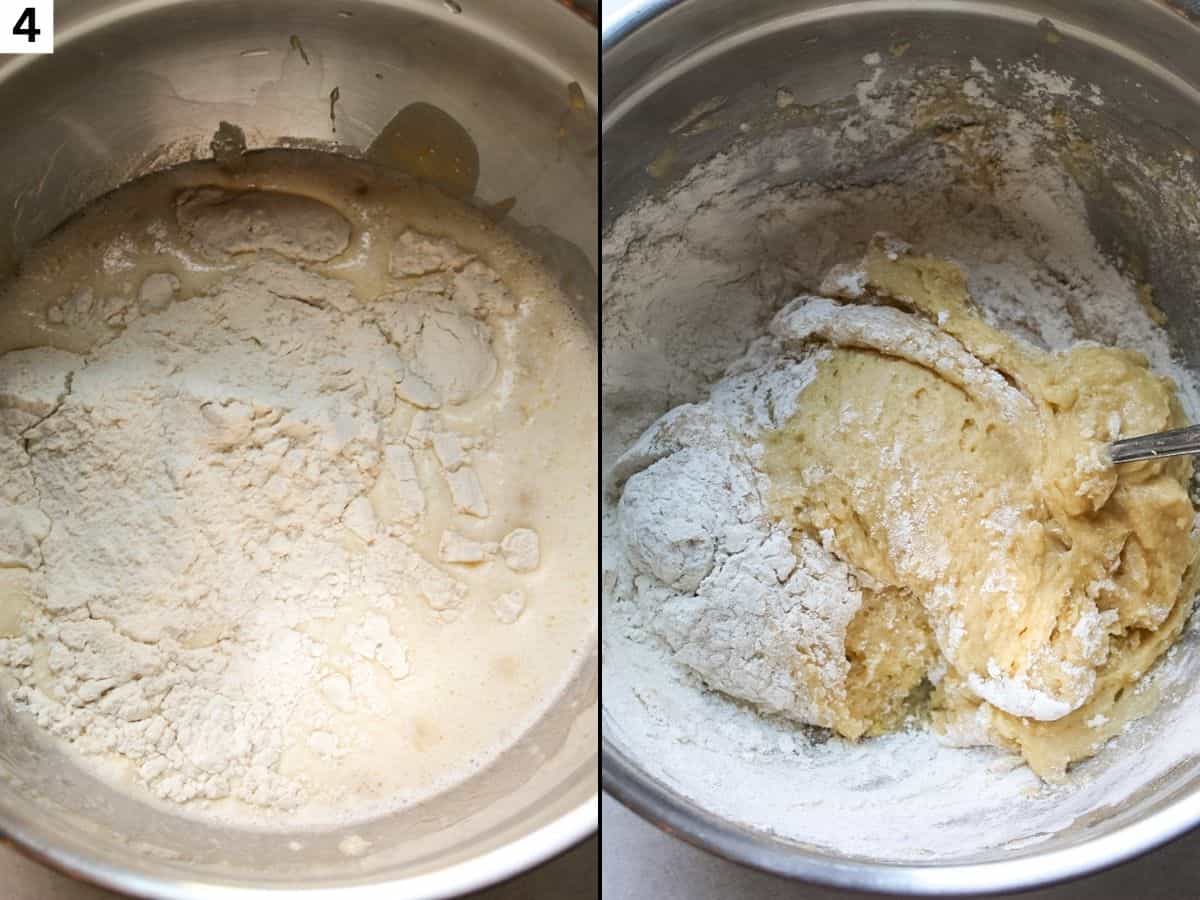
5. Knead the dough. Knead the dough for at least 20 minutes or until it does stick to hands much and becomes elastic.
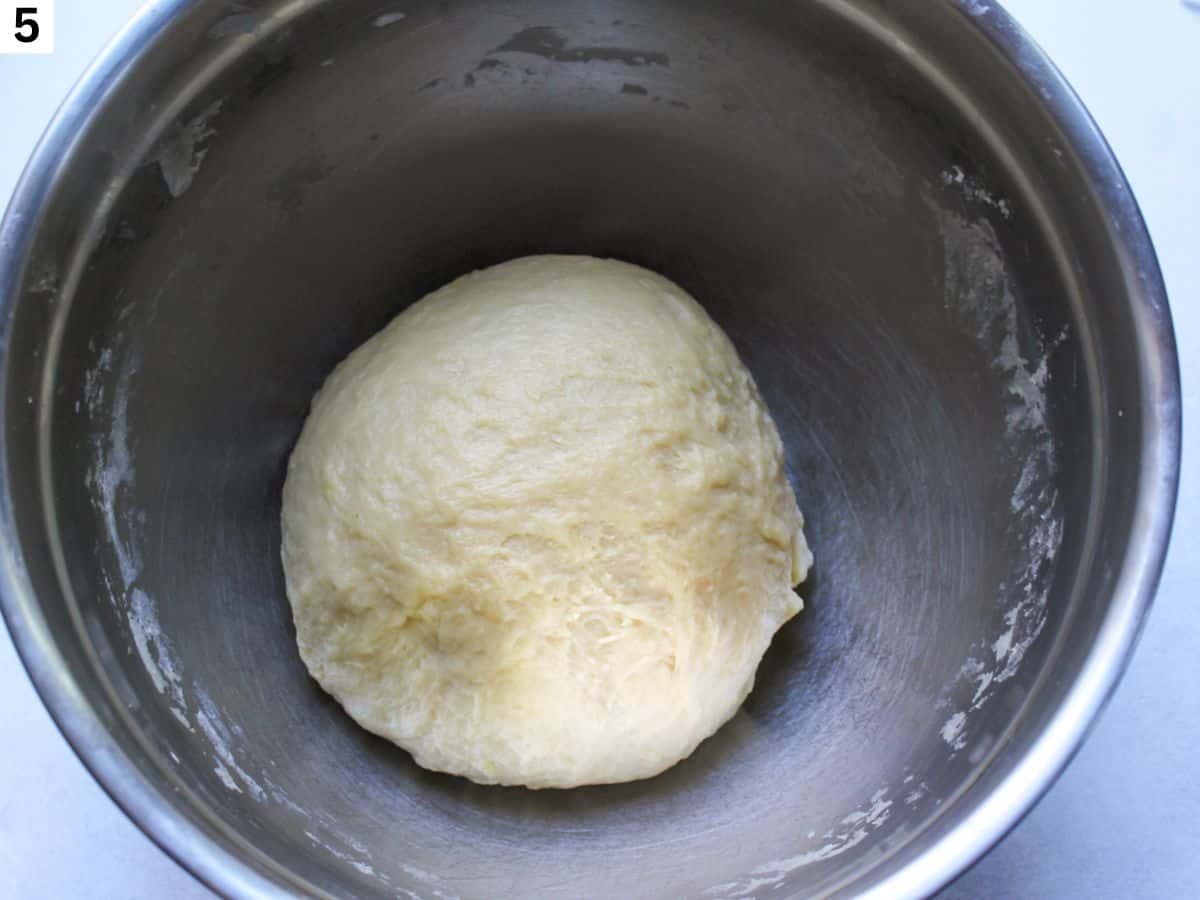
6. First rise. Form the dough in to ball, place it back in a bowl, cover and let rise for 60-90 minutes or until doubles in size.

7. Shape paska breads. Divide into two parts, form the balls and place them in molds.
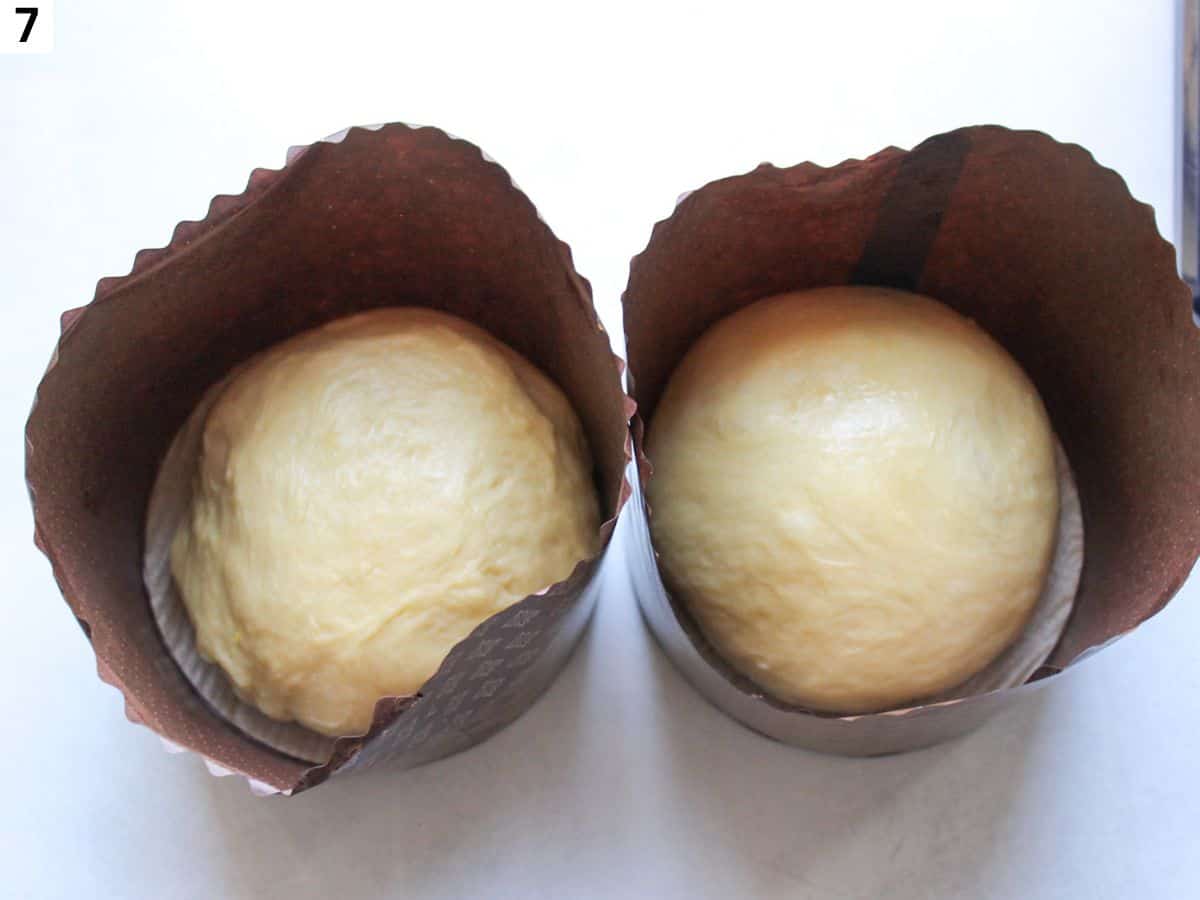
8. Second rise. Cover and let rise for another 30-40 minutes.

9. Bake paska bread. Brush with egg wash and bake at 350 for 45-50 minutes or until the tops are brown and internal temperature reaches 198-205F.

Once it cools down, you can glaze the tops and add add sprinkles.
Recipe tips
- Make sure the yeast is fresh and added to the warm milk (105-115f) to activate it.
- If your kitchen is too cold, place the dough in the microwave with the door slightly open. The light from bulb will create warmer environment.
- The dough should remain sticky at the beginning, do not add more flour unless it is still super sticky after about 10 minutes of folding and kneading it.
- Kneading should take no less than 15-20 minutes. You can use the stand mixer if you have one. I make mine my hand.
- Because Paskas are tall, I recommend using the food thermometer to ensure the bread is fully cooked. For enriched bread, it is best to let it get to 198-200F.
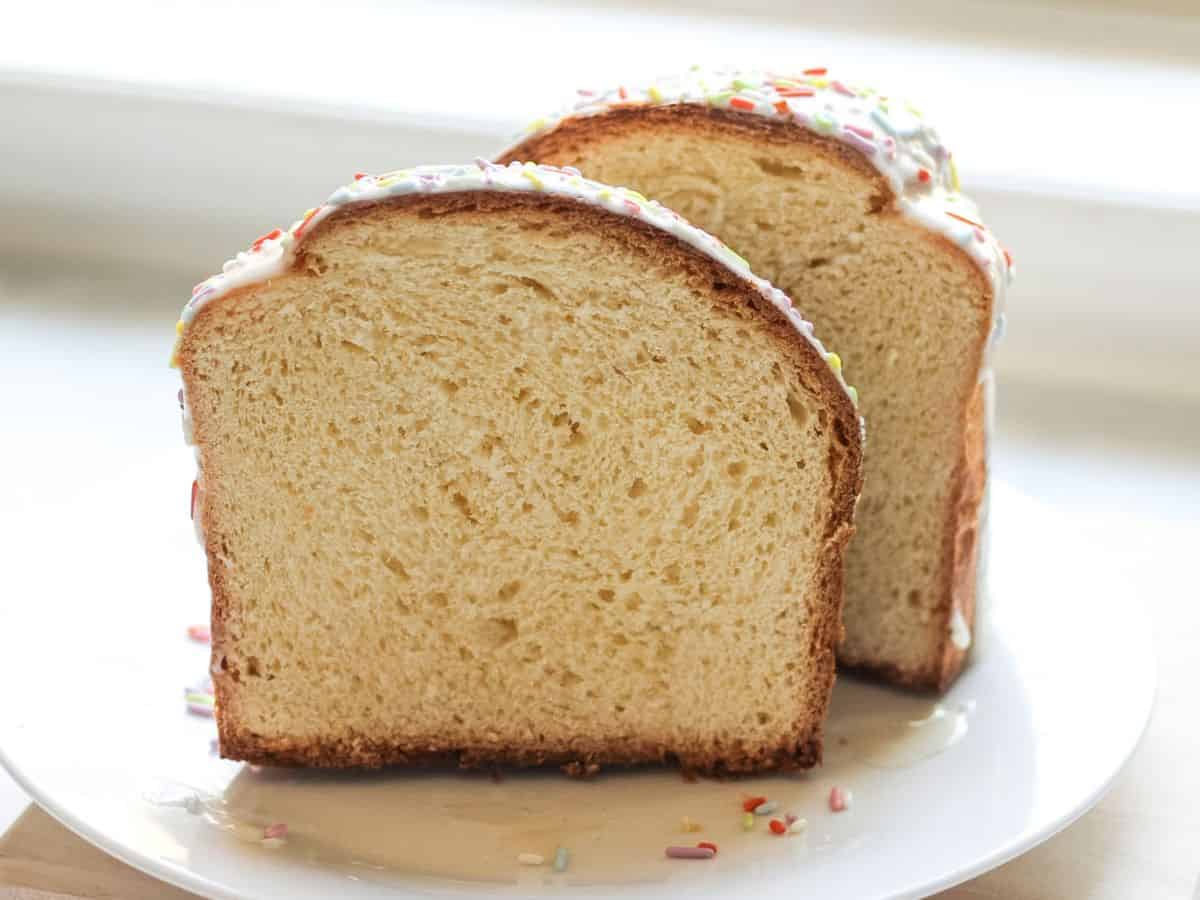
How to store paska
Paska can be stored at room temperature for up to 3-4 days. Make sure it is in airtight container or a bag, so it does not dry out.
If your home is too warm, it is better to store it in the fridge. It will last in the fridge for up to 10 days.
You can also freeze cooled down paska for up to 3 month. Make sure you do not add the glaze if you plan to freeze it.
Fun leftover tip: It was never allowed to throw out any leftover paska, even if it became stale. So my mom would cut into small squares and toast them in the oven until they turned basically into croutons. We would snack on them by dipping them into warm tea or hot cocoa.
Optional paska dough add-ins
You can add some things to the dough.
- Dried fruit: added before the first rise to the dough. You can add raisins (traditional add-in), cranberries, cherries, pineapple pieces and more.
- Chocolate chips: Fold them in before forming the breads.
- Nut or coconut shreds: Less common, but can be easily added for taste and texture.
Paska Glaze options
You can enjoy Paska as it is or add a simple glaze on top. In our family, we love it glazed. It's my son's favorite part. So here are my favorite glaze options too choose from.
Egg white glaze (the most traditional)
Ingredients:
- 2 egg whites
- 120 (about 1 cup) grams powdered sugar (or more for thicker glaze)
- 1 tablespoon lemon juice
- 1 pinch of salt
Instructions:
- Beat egg whites with a pinch of salt until fluffy
- Gradually add powdered sugar, mixing it until white and glossy. Stir in lemon juice at the end.
- Spread over cooled paska. For safer option using raw egg whites, place glazed bread in the preheated to 250F oven for 6-8 minuted.
Lemon glaze (the easiest one)
Ingredients:
- 120 grams (1 cup) powdered sugar
- 3-4 tablespoons lemon juice
Instructions:
- In a mixing bowl, add 1 cup of powdered sugar and 2-3 tablespoons of lemon juice. Whisk until you have thin pourable glaze, adding more lemon juice as needed.
- Pour the glaze over cooled paska right away.
Gelatin Glaze (The most beautiful look)
Ingredients:
- 100 grams (½ cup) sugar
- 30 ml (2 tablespoons) warm water
- 5 grams (1 teaspoon) gelatin
- 1 tablespoon lemon juice
Instructions:
- Mix gelatin with 1 tablespoon of warm water and let it bloom. (or prepare according to package instructions).
- Heat remaining water with sugar until fully dissolved.
- Let syrup cool slightly, then add gelatin and lemon juice.
- Using electrical mixer, mix until smooth and thickened.
White chocolate glaze
Ingredients:
- 140 grams (¾ cup) white chocolate chips ( you can also use dark chocolate)
- 40 ml (about 3 tablespoons) heavy cream
Instructions:
- Heat the cream until hot but not boiling.
- Pour hot cream over the chocolate. Let it sit for a minute. Stir until smooth.
- Pour into the center of the paska and let it spread naturally. If it is too thick, warm it up in the microwave.

Can I use regular pan for baking paska?
If you do not have paska (panetone) molds, you can use one cast iron pot or bread loaf pans to bake paska.
Can I mail paska bread?
Yes, you can mail paska bread just like any other homemade bread. Make sure it is completely cooled, then wrap it tightly and package it well before shipping. It's also a good idea to check your post office guidelines for mailing baked goods.
Other Ukrainian baking goods you may like
📖 Recipe
Ukrainian Easter Bread (Paska)
Equipment
- 2 large bowls
- kitchen scale or measuring cups
- 1 medium bowl
- 1 Whisk
- 2 20 oz 3.55x3.55x3.55 inches Kulich or Panetone molds*
Ingredients
- 240 ml (about 1 cup) warm milk
- 1 packet (7-8 grams) dry yeast
- 2 tablespoons sugar (for yeast)
- 5 egg yolks, room temperature
- 150 grams (¾ cup) sugar
- 1 tablespoon lemon zest (optional)
- 1 teaspoon vanilla extract
- ¼ teaspoon salt
- 100 grams butter, melted and slightly cooled
- 450-500 grams (about 4 cups) all purpose flour
- 1 egg (for egg wash)
- 1-2 tablespoons neutral oil ( as needed for hands to knead the dough and form the breads)
Lemon glaze
- 1 cup powdered sugar
- 3-4 tablespoons lemon juice
Instructions
- Activate the yeast. Warm up the milk to 105-115℉. Add the milk to the large bowl (the one you will be using to mix the dough). Stir in 2 tablespoons of sugar and 7 grams of yeast. Let it sit for 10 minutes, until it becomes foamy. If it is not foamy, your yeast may not be fresh, and you will need to discard and repeat the process with the fresh yeast.
- Mix eggs and sugar. In a medium bowl, whisk 5 egg yolks, 150 grams of sugar, 2 teaspoons of vanilla extract, and ½ teaspoon of salt. Whisk until creamy, and the mixture becomes a lighter color. Add lemon zest (if using) and whisk again. The sugar does not need to be fully dissolved. You can also use a mixer for this step.
- Combine ingredients. Add egg mixture to the activated yeast. Stir in 100 grams of melted (but not hot) butter. Stir it all with a whisk until combined. Does not have to be perfectly smooth.
- Add flour. Start adding flour, stirring the dough with a spatula. Once it is hard to do with a spatula, it's time to use your hands. Do not add all the flour at the same time. You may need 80 grams more or less. The dough should be quite sticky, do not add more flour.
- Knead the dough. Since the dough is quite sticky, start by stretching and folding it. Keep doing it until the dough becomes more elastic. You can use it on a flat surface or in a bowl. You can also grease your hands slightly with oil. Once the dough is less sticky, continue to knead with your hands for about 20 minutes or until you have an elastic dough that holds shape well in a ball.You can also use a stand mixer and a dough hook to knead the dough.
- First proof. Form the dough into a ball and place it back into the bowl. Cover with a clean towel and let it rise for 60-90 minutes in a warm place, until doubled in size.
- Shape and second proof. Divide the dough into 2 equal parts. I used a kitchen scale for accuracy. Slightly grease hands with oil and form two balls. Place them in Paska molds. Cover with a towel and let rise for another 30-40 minutes.
- Bake. Preheat oven to 350℉. Bake for 40-45 minutes until the tops are golden brown. I like to use the food thermometer to make sure they are cooked inside. The internal temperature should reach 198℉-205℉.
- Let cool down and glaze (optional). Let Paskas cool down in molds. After they complete cool down, you can remove molds add the glaze on top.
Simple lemon glaze
- In a mixing bowl, add 1 cup of powdered sugar and 2-3 tablespoons of lemon juice. Whisk until you have thin pourable glaze, adding more lemon juice as needed.
Comments
No Comments