
Baking with honey is not simple, but once you understand how it works you can completely transform your baked goods.
I grew up as the granddaughter of a local beekeeper, who kept a medium-size hive and produced honey for our family and for sale in small bathes. We always had honey at home, and I still remember chewing fresh honeycomb straight from my grandpa's hands after he worked so hard to harvest it each season. That honeycombs was better than any candy.
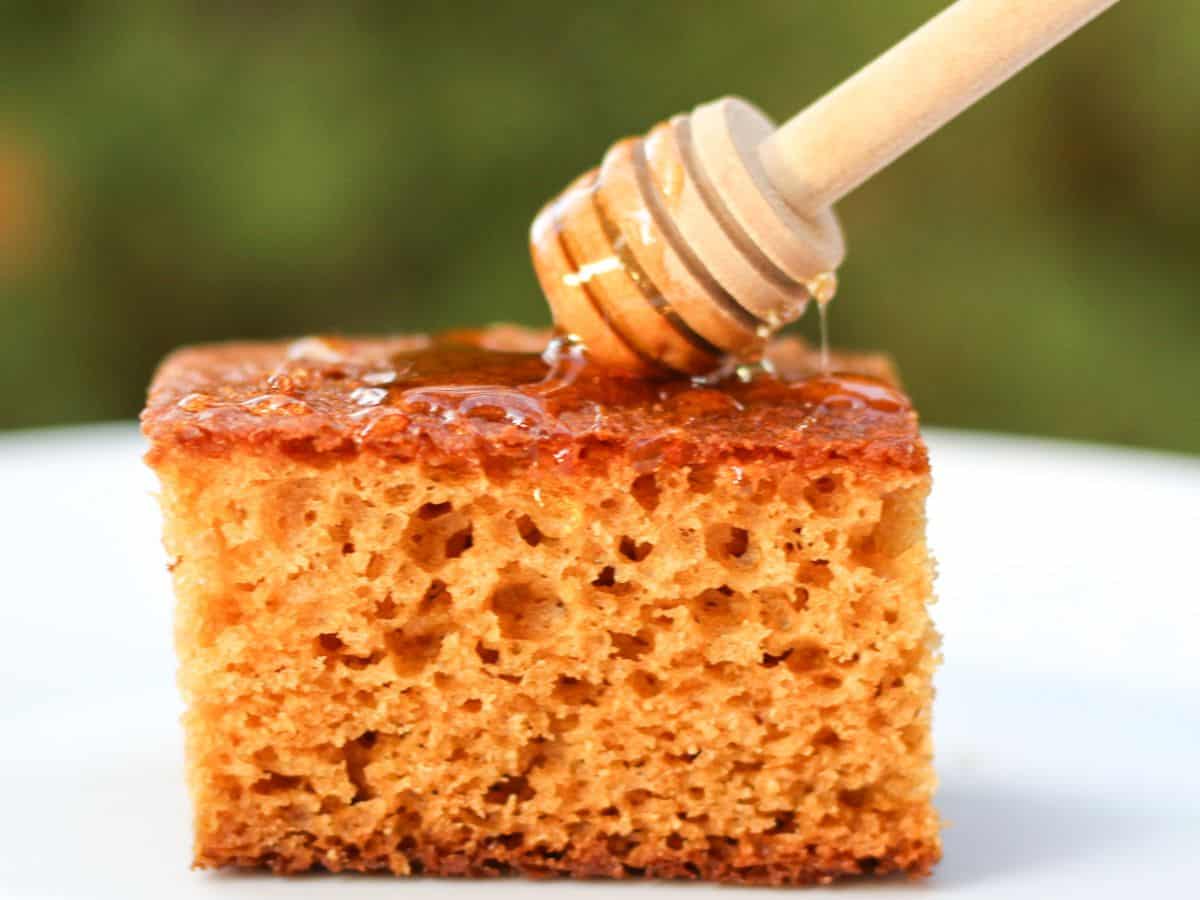
My family baked and cooked with honey quite often. I have always loved using it inn simple recipes too, like my homemade honey oats. Over time, after moving to the USA, I have tested baking with different typed of honey in everything between cakes, cookies, muffins, breads and I have learnt what works and what does not. I have decided to create a special post to share this information with others.
Once you are ready to bake, check out my 8 Honey Baking Recipes for some fun and tasty ideas.
Jump to:
- What honey does in baking
- Type of honey for baking
- How to properly measure honey
- How to substitute honey for sugar in baking
- Baking with honey + sugar together (the best way)
- Common mistakes when baking with honey
- Best recipes to start baking with honey
- Best flavor pairings for honey
- Frequently asked questions
- 💬 Comments
What honey does in baking
When you add honey as a main sweetener or along sugar, besides adding sweet taste it also affects the baking goods in a few way:
- Adds moisture. The baked goods stay moist longer without going stale.
- Helps browning. The natural sugars caramelize faster.
- Brings depth of flavor. Depending on the type of honey you are using.
- It is slightly acidic. it reacts with baking soda.
Type of honey for baking
You can find a few types of honey at the grocery stores or farmers markets in the USA. Can you believer there are more than 300 types of honey in the world? You can bake with any type of honey, but some types are better than other for certain baked good.
Quick tip: You do not need expensive, fancy honey for baking. But it has to be real honey and also sustainably produced.
- Light or mild honey (clover and acacia): great for light cakes and muffins.
- Dark or bold honey (buckwheat, wildflower): great for spices cookies, breads, and cakes.
But not matter what type of honey you choose, I always try buying local raw honey when possible, making sure it has been sustainably produced. It supports responsible beekeeping and helps protect the pollinators.
How to properly measure honey
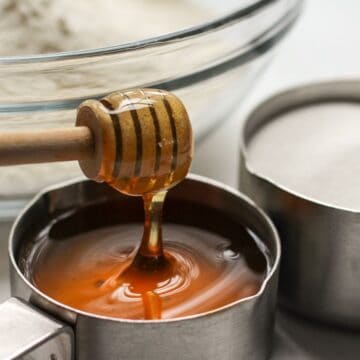
Measuring honey correctly is important in baking, as it can affect sweetness and texture. But it can be challenging to measure honey correctly. It is thick and sticky, and clings to spoons and cups. But I have are a few excellent ways to measure it accurately without the stress:
Using measuring cup or spoon: Grease the measuring cup or a spoon lightly with any neutral oil. Oil will create a barrier between the cup and honey, so the honey will slide out without sticking.
Using Adjust-A-Cup. It is a measuring cup with a push-plunger design, designed specifically for sticky ingredients such as honey, syrop, peanut butter.
By weight: Place your mixing bowl on a kitchen scale and set it to zero (tare). Scoop the honey from the jar keeping on the scale directly into the bowl until you reach the required amount in grams or ounces on the scale.
For best results, lightly grease your spoon with a neutral oil so the honey slides off easily and you get an accurate measurement.
How to substitute honey for sugar in baking
Substituting honey for sugar is one of my favorite ways to add moisture and flavor to baked goods, but it requires some math and a few tweaks. For more science, check out my guide to substituting honey for sugar with the conversion chart.
You just have to follow simple rules to substitute honey for sugar in baking:
- Use ¾ cup of honey for 1 cup of sugar.
- For every 1 cup of honey, reduce liquids by about ¼ cup. It includes water, milk, kefir, juice. Do not reduce the amount of eggs or butter.
- Bake at lower temperatures, 325-350℉ to prevent it from burning.
- Add about ½ teaspoon of baking soda for each cup of honey (if recipe does not call for baking soda already).
IMPORTANT NOTE: There is one important thing to keep in mind, that honey cannot always be used a direct replacement for sugar in every recipe. While it works for things like muffins, quick breads, and pancakes, it won't always give the same results elsewhere, unless the recipe is specifically developed to be made with honey.
That it why I never treat honey like a universal swap for sugar. Some recipes do quite well and others are simply better left with sugar as the main sweetener.
Baking with honey + sugar together (the best way)
I prefer using both honey and sugar together in baking. Using only homey does not automatically make a recipe healthier. Honey is still a from of sugar, just a more flavorful and aromatic. It is also more expensive and, in a way, more precious. I like to treat honey as a special ingredient rather than a main sweetener.
For me, honey is not about replacing sugar completely. It's about adding depth, moisture, and a subtle richness that sugar can't provide.
Why combining sugar and honey works best:
- Honey adds moisture and flavor
- Sugar adds structure and crisp edges.
Baking ratios with sugar and honey: I recommend using 75/25 sugar-to-honey ratio, but 60/40 can also work well. When baking with both, you do not need to reduce the liquids amount much. For 75/25 ratio, you can keep the liquids the same. For 60/40 ratio, reduce the liquids by 1-2 tablespoons.
Common mistakes when baking with honey
- Using too much honey will result in dense and wet texture.
- If you do not reduce liquids properly, the baked goods will be soggy.
- Baking at high temperatures will result in bunt tops and underbaked centers.
- Using bold/dark types of honey in delicate recipes.
Best recipes to start baking with honey
- Simple honey cake: Old-fashined Ukrainian one-layer honey cake.
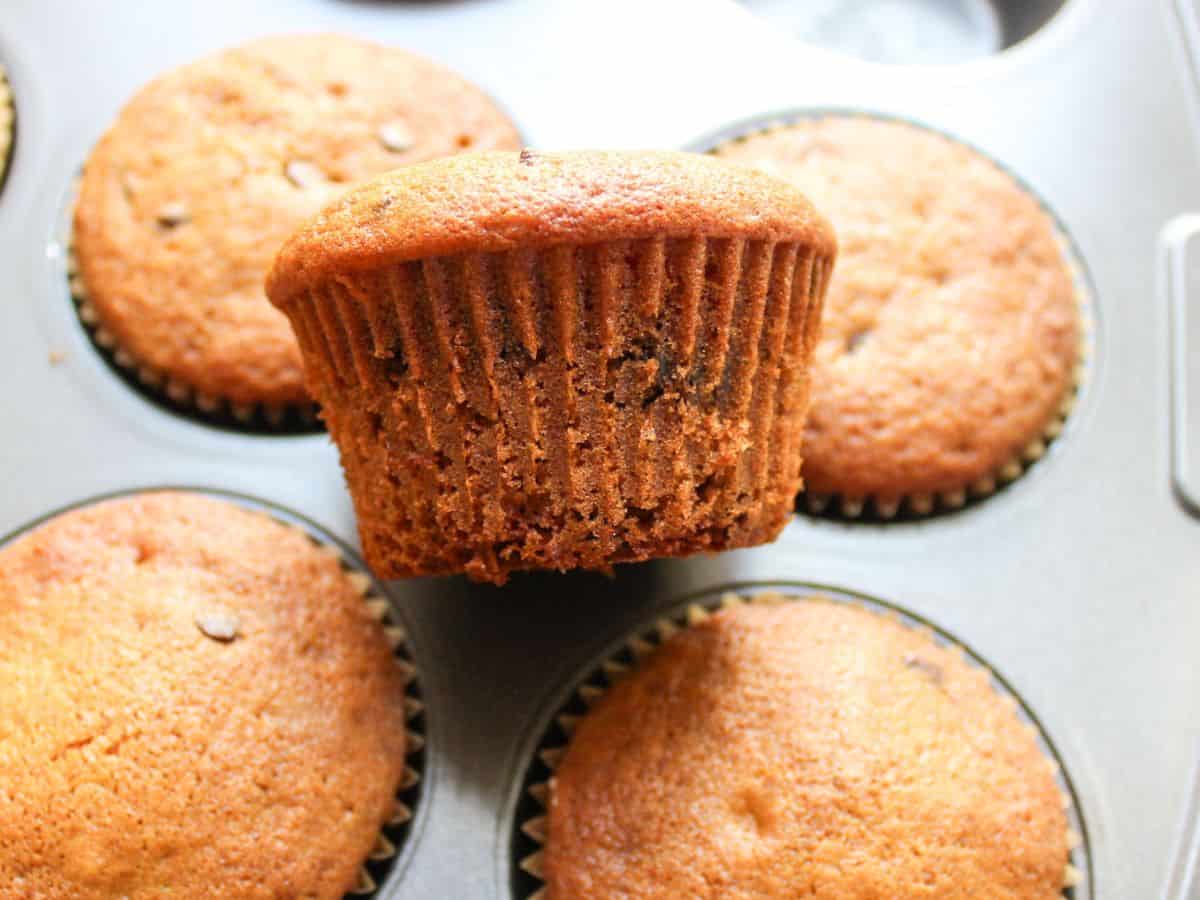
- Honey muffins: Perfect for a quick breakfast or a snack.
- Honey banana bread
- Honey cookies: Simple sugar cookies, great for molds or cut out.
- Honey sponge cake: Medovik inspired honey sponge cake.
- Flaky honey scones: Moderatelately sweet scones, baked and also drizzled with honey
- Classic Medovik cake: 8-layer Eastern-European honey cake with sour cream frosting)
Best flavor pairings for honey
You can experiment by adding different ingredients, such as
- Honey+cinnamon
- Honey+cardamom
- Honey+citrus
- Honey+nuts
Frequently asked questions
Yes, you can bake with honey in place of sugar when making things like muffins, simple loaf breads, certain cookies. But, it's not always a direct 1:1 swap, and results can vary depending on the recipe. A general guideline is to use ¾ cup of honey for each cup of sugar and reduce the liquid by ¼ cup for each cup of honey used. I recommend using recipes that are specifically developed for honey when possible. Otherwise, I personally prefer using honey together with sugar, where it adds flavor, moisture, and depth without affecting structure too much.
Honey muffins can turn out dense for a few common reasons:
1.Too much honey compared to sugar or flour
2. Not reducing liquids enough, leading to a heavy batter
3. Overmixing the batter.
4. Not adjusting leavening properly (especially if baking soda is missing when using honey)
Yes, crystallized honey is completely fine to use in baking.
But before using it, you will have to bring it back to a liquid state. Placing the jar in a warm water bath or heat it slowly in a small saucepan over low heat. Stir it occasionally until it softens and becomes liquid again. Avoid using the microwave.

Comments
No Comments