
Learn how to weigh baking Ingredients using a digital kitchen scale, and why it matters. Did you know that a cup of flour can vary by 30 to 40 grams depending on how you scoop it? In baking, that is a huge difference, and it's the exact reason why most failed recipes go wrong before you even start mixing the ingredients.
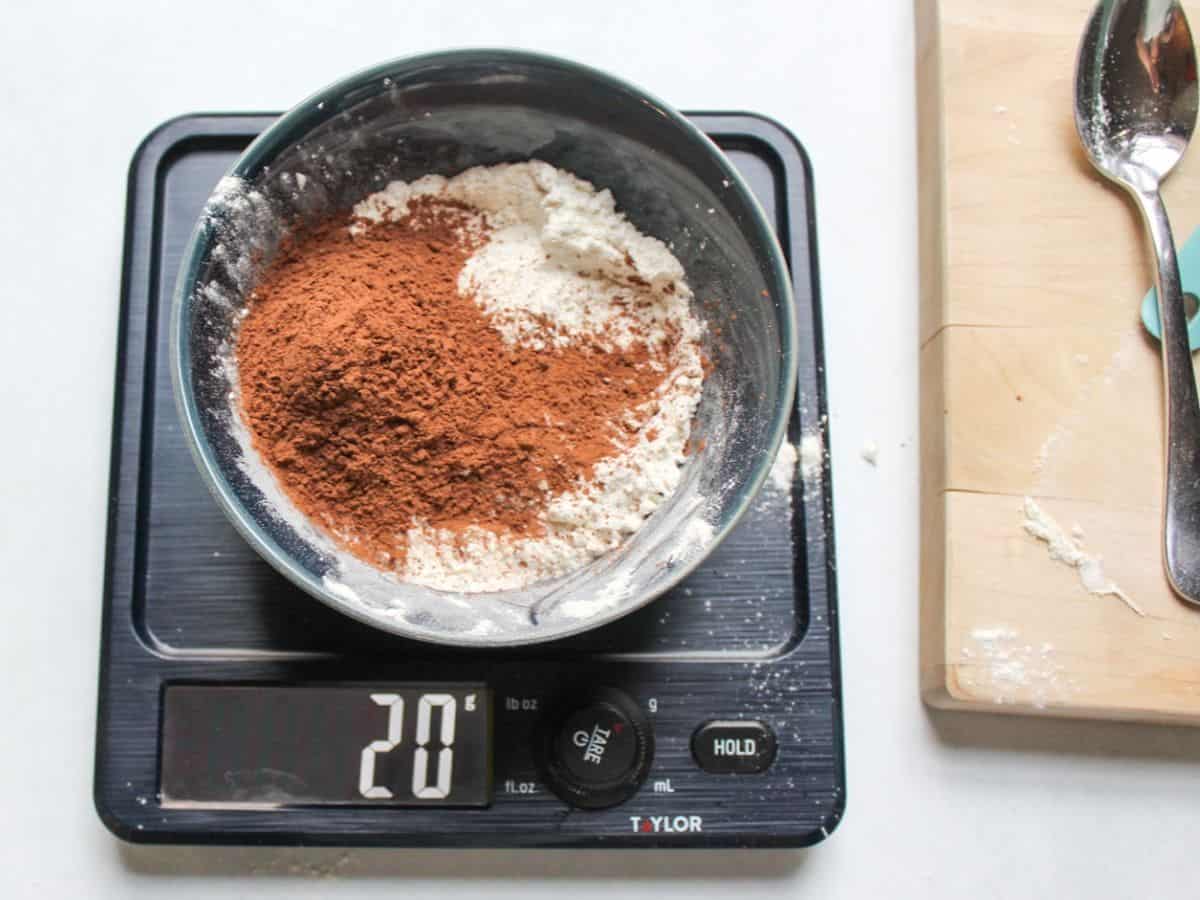
My story is the funny one and it is the complete opposite, because before I moved to the USA, I had never even seen a classic measuring cup. Growing up in Europe, we used a kitchen scale or measured by eye (mostly my grandmother's generation). My mom also had a standard size glass (called "stakan"), that was a baseline for measuring some ingredients, mostly liquids. When I first arrived here, I was amazed by all the cool measuring cups and spoons in every kitchen. At first, they seemed so easy to use, but for some reason, my well-tested baking recipes stopped turning out consistently. I blamed the oven, the flour, or the yeast, until I realized the real problem was how I was measuring my ingredients. And guess what? Now that I'm in culinary school, I feel right at home, because professional kitchens weigh everything in grams on a scale, too.
I still love using cups and spoons for everyday cooking, where things are added to taste or preferred texture. But for recipes that rely on a little bit of science, like baking, a scale is the best way to go. It is also much easier, once you learn how to use it. With cups, you either dirty a whole stack of them or have to wash and dry the same cup between ingredients, which is annoying and time-consuming. So today, I'll show you how to use a kitchen scale to measure your ingredients, so your baked goods turn out right on the very first try, with consistent results every time.
How to weigh ingredients using a kitchen scale? (2 ways)
You do not need an expensive scale, any basic digital kitchen scale that switches to grams will work. I will show you how to weight ingredients into one bowl or straight from the bag or container when your bowl is too large for the scale. You can use these methods for dry, wet or sticky ingredients.
Before your start always do this: Always place your kitchen scale on a hard, flat, even countertop. Never place it on a dish towel, silicone mat, or cutting board. Give the scale a gentle tap on each corner to make sure it sits completely flat and doesn't wobble. If it rocks even slightly, flip it over and check the tiny adhesive rubber pads on the bottom feet; over time, one can peel off in a kitchen drawer, throwing off your weight readings.
Here is how to measure everything into one bowl or multiple bowls:
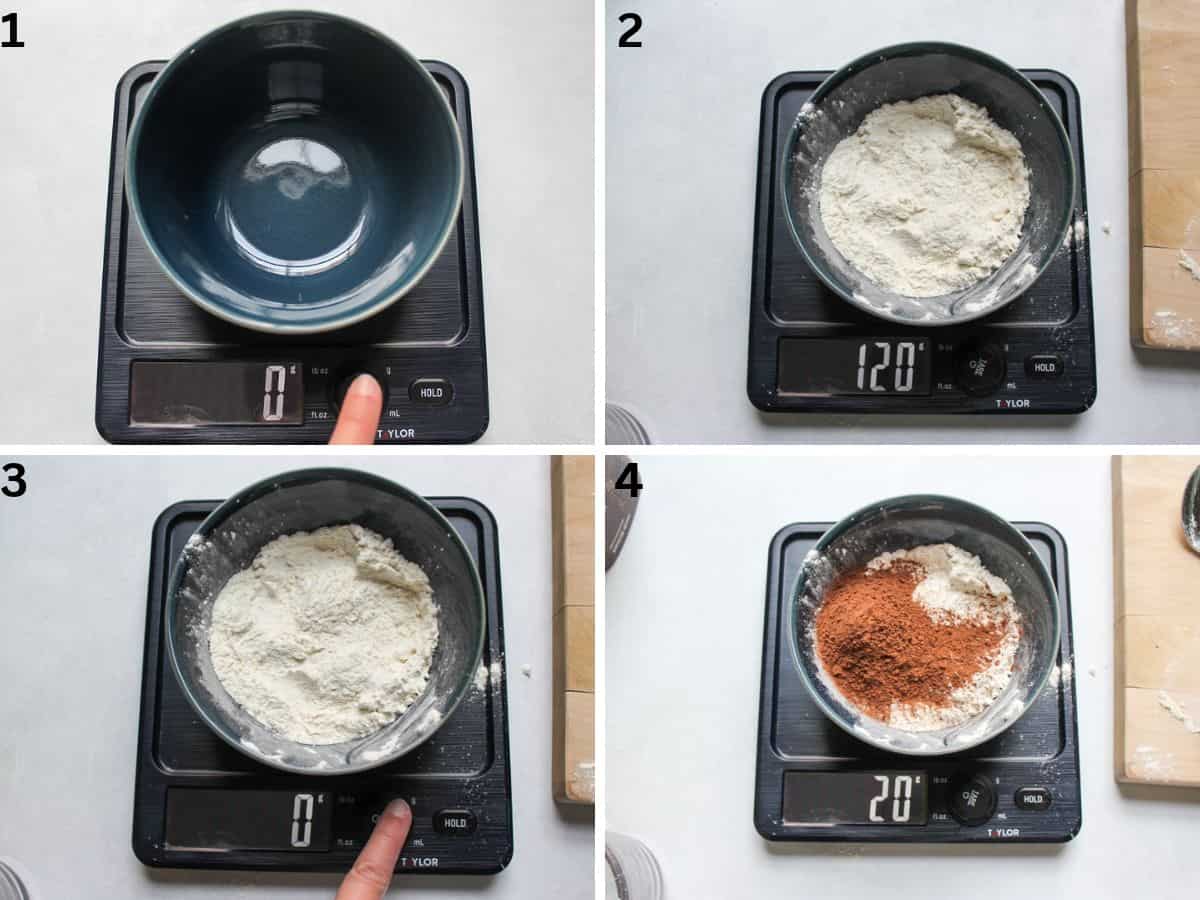
- Set your scale to grams (g). Turn on your scale and make sure the unit is set to grams, not ounces (oz). Grams give you much better precision.
- Zero out the bowl or other container. Place your bowl or other container on a scale and press Tare/Zero. The display will reset to 0g, so the weight of the bowl is not counted.
- Add your flour: Spoon or your flour (or other ingredient) directly into the bowl until the screen shows exact gram amount needed for the recipe.
- Reset and keep going: You can switch to a clean bowl, or if recipe allows add the next ingredient to the same bowl by zeroing it out again and adding your next ingredient (like sugar, cocoa powder, salt etc) straight into the bowl. Now you have all your dry ingredients in a bowl, without making any extra dishes dirty.
The second way is one of the coolest. Let's say you mixing bowl is too wide/large for the scale or you want to add flour directly into a stand mixer bowl without moving it, you can weigh straight from the bag:
Here is how to weigh the ingredients straight from the bag (reverse weighing):
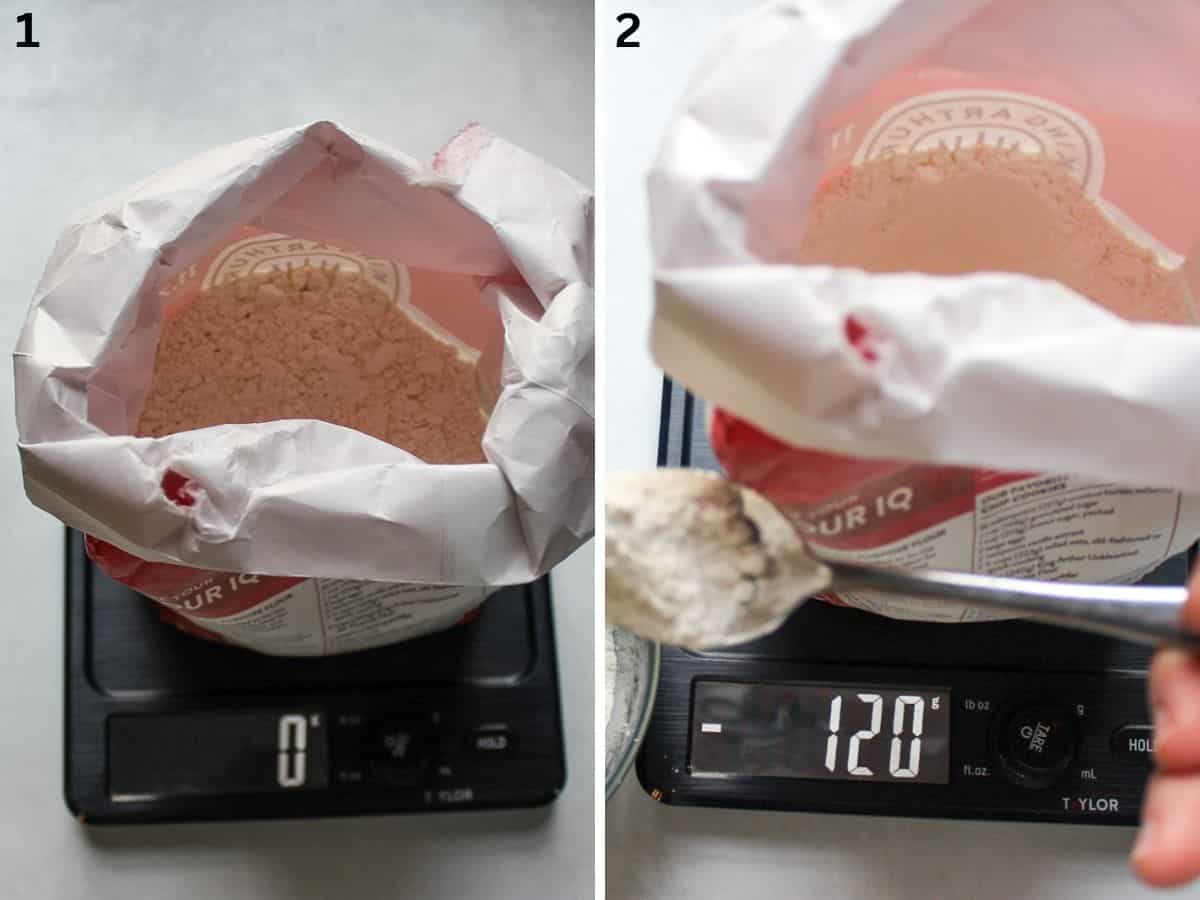
- Zero out the bag with flour (or other ingredient). Place the bag or a container with flour (or sugar) directly on the scale. Press Tare/Zero so the screen sets to 0 g.
- Scoop into your mixing bowl. Use a spoon or a scoop to transfer flour out of the bag and into the mixing bowl.
- Read the negative number: As you remove the flour, the display will show a minus sign. For example, -120 g. Once it hits -120 (or whatever gram number our recipe calls for), stop scooping, because you have added the exact right amount to your mixing bowl. If you accidentally scoop a little too much out of the bag, you do not have to start all over, just spoon a little bit back into the bag until the display hits your exact target number.
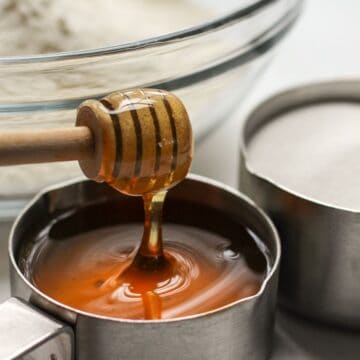
Quick Tip for Sticky and Wet Ingredients: You can use these exact same methods for dry, wet, or sticky ingredients like honey, maple syrup, oil, or peanut butter. Simply set the honey jar or squeeze bottle on the scale, press Tare / Zero, and pour or squeeze straight into your mixing bowl until the display shows the negative gram amount you need. And you have no sticky measuring cups to scrape or wash!
How do I know if my kitchen scale is accurate
You do not have to calibrate a home digital scale before every use, but if you drop it or the battery gets low, you can test is easily with US Coins. Place 10 nickels on the center of the scale. Each nickel weighs exactly 5 grams If your scale is accurate, it should display 50 g. If it is off by more than 1 gram, make sure the scale is sitting on a flat surface and swap for new batteries.
Most Common Baking Conversions
- 1 cup all-purpose flour is 120 grams
- 1 cup bread-flour is 127 grams
- 1 cup cake flour is 114 grams
- 1 cup whole-wheat flour is 130 grams
- 1 cup granulated white sugar is 200 grams
- 1 cup packed brown sugar is 213 grams
- 1 cup powdered sugar is 115 grams
- 1 cup melted butter is 227 grams (2 US sticks or 16 tablespoons)
- 1 cup milk is 240 grams (1 ml equals 1 gram)
A Quick Note on My Recipes: I always include US cup measurements alongside gram weights in my recipes (especially when precision matters most). However, every single bake on Sava's Kitchen is developed and tested in grams first. So, for guaranteed, repeatable results, I always recommend using a digital kitchen scale.
Why not to use ounces? Most of kitchen scales also an ounces (oz) setting. But I recommend having your kitchen scale always set to measure in grams, even for liquid ingredients. While ounces are more accurate than cups, grams (g) are much smaller units (there are about 28 grams in an ounce). Using grams will give you the best precision that bakeries and culinary schools rely on.
How to Measure Flour Accurately Without a Scale
If you don't own a kitchen scale yet, you can still get great results with my recipes using the fluff, spoon and level method. Just make sure you use dry measuring cups (the flat-rimmed cups without pouring spout), never a liquid measuring pitcher.
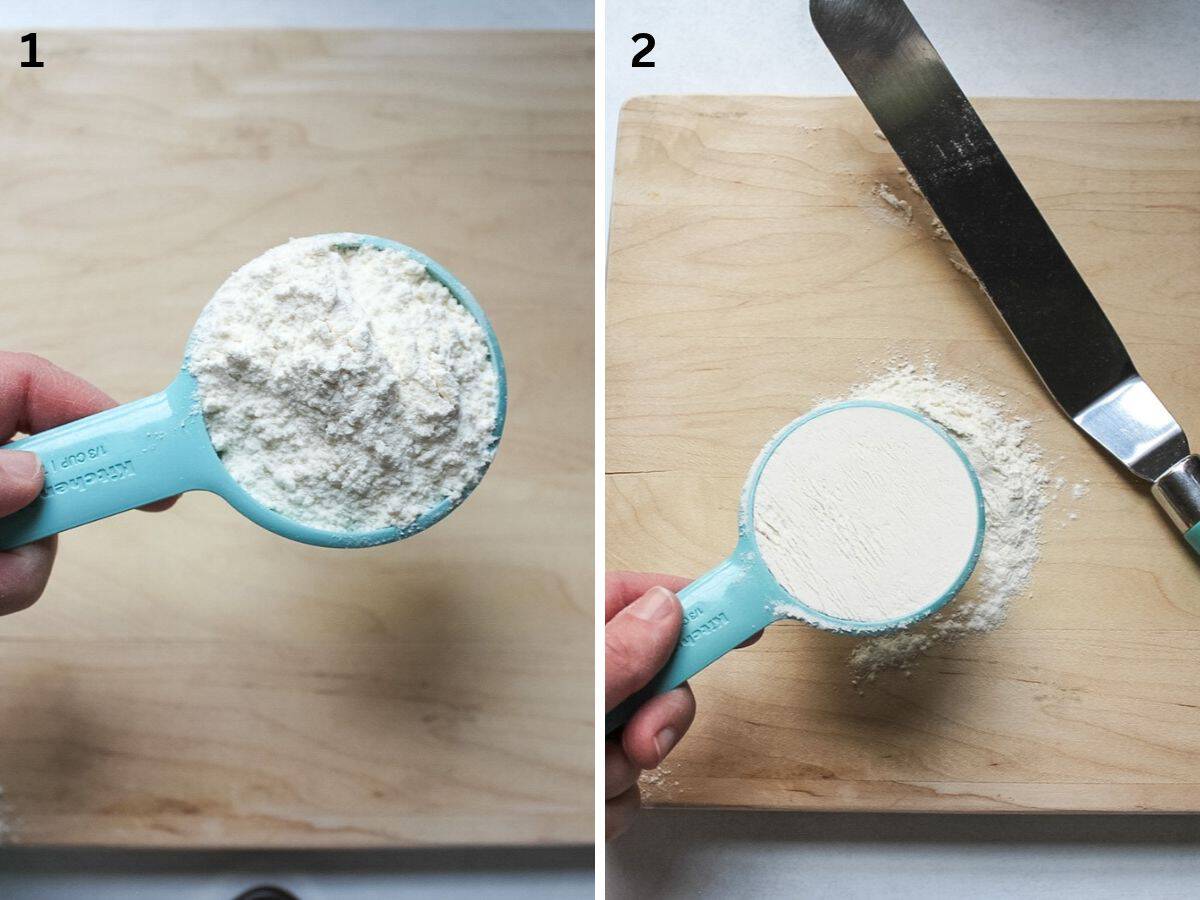
- Fluff the flour. Use a fork or a spoon to stir the flour inside the bag or container for a few seconds. This step loosens up any packed pockets of flour.
- Spoon into the cup: Place the measuring up on a flat, dry surface. Lightly spoon the fluffed flour into the measuring cup until it heaps over the top. Never tap or shake the cup on the counter to settle it, this will pack the four and you will end up adding more flour than needed.
- Level it off: Take the flat back of a butter knife or a bench scraper and sweep the excess flour straight back into the bag in one smooth motion.
Should I weigh salt, baking powder, baking soda and yeast?
For everyday home baking, I recommend using measuring spoons for small amounts of salt, baking powder, baking soda, yeast, and spices.
Most standard digital kitchen scales are not sensitive enough to accurately register tiny weights under 3 to 5 grams, especially if you sprinkle an ingredient in slowly, which some scales will not even detect. But even a small change in baking soda or yeast can affect how a dough rises or tastes, a leveled measuring spoon is much more reliable for these ingredients. Plus, if you use individual yeast packets, the work is already done for you, as each standard packet comes pre-measured at 7 grams, or 2¼ teaspoons.
The exception: If you are making a large batch of bread dough or other baked good that calls for 10 grams or more, you can weigh them. For everything else, save your main kitchen scale for flour, sugar, butter, honey, and liquids.
Want to test out your new scale right away? Try weighing your ingredients in one of these reader-favorite recipes:
If you have other questions about using the kitchen scale, need help with converting a favorite family recipe into grams, or want to see another baking basic covered next, drop a comment below. I would love to help!
Comments
No Comments