
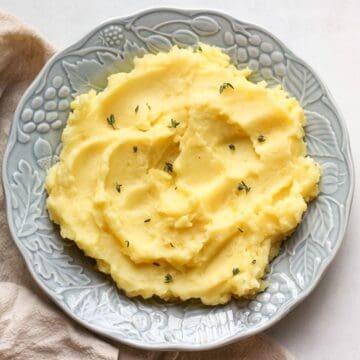
These homemade mashed potatoes are a family recipe I've perfected over the years. They are creamy, flavorful, and perfectly seasoned. The type of potatoes, proper texture, seasoning, and just the right amount of butter are what set them apart.
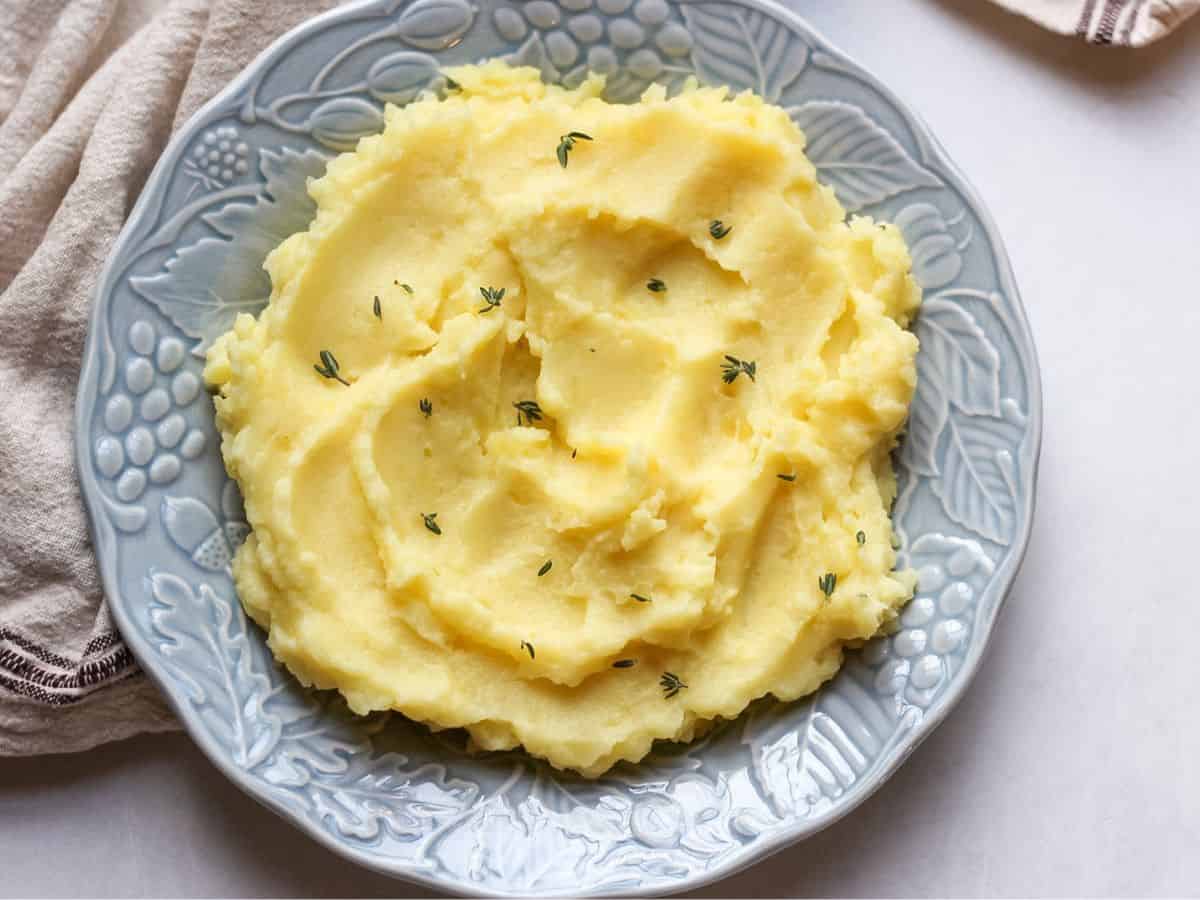
Mashed potatoes may seem simple. You just boil, mash and add butter. But getting them right takes a few techniques. So if you are new to cooking, the whole process may seem confusing. That's why I am sharing the detailed septet-by-step recipe with the small details that turn everyday mashed potatoes into something truly special.
Jump to:
Choosing the Best Potatoes
I grew up in Ukraine, where we grew our own potatoes every year, so I have always been very picky about potatoes. When I first moved to the U.S., my mashed potatoes never turned out quite the same we had back at home. It took some trial and error to realize that potato varieties here cook differently and effect the final texture.
For the best mashed potatoes, I recommend Yukon Gold potatoes. They create a naturally creamy, rich texture with butter flavor. Russet potatoes are another option, but they tend to be lighter and fluffier, which I personally find a bit too dry for classic creamy mash.
No matter which type you choose, quality matter too. I like to handpick each potato, looking for ones that are firm, smooth, and have a rich, even color with no green spots or sprouts. I usually avoid bagged potatoes, since it's harder to see the quality of each potato.
Other ingredients you will need
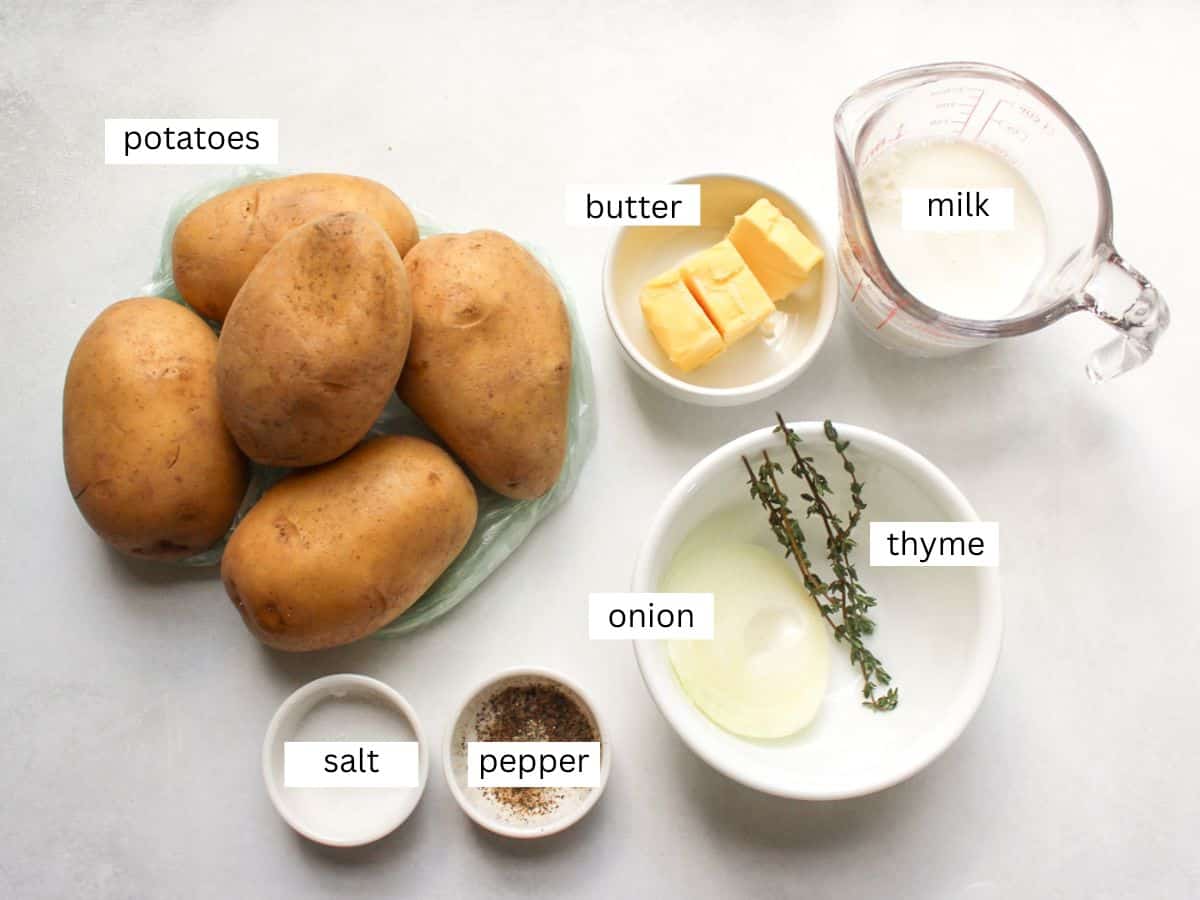
Besides the potatoes, you will need water, salt, butter, milk (or cream). Optionally, I like to add onion and thyme for the cooking, and black pepper for finished mashed potatoes.
You can find the ingredients quantities in the recipe card below.
How to make mashed potatoes
Follow each step, where I explain the whole process in details.
Peel the potatoes
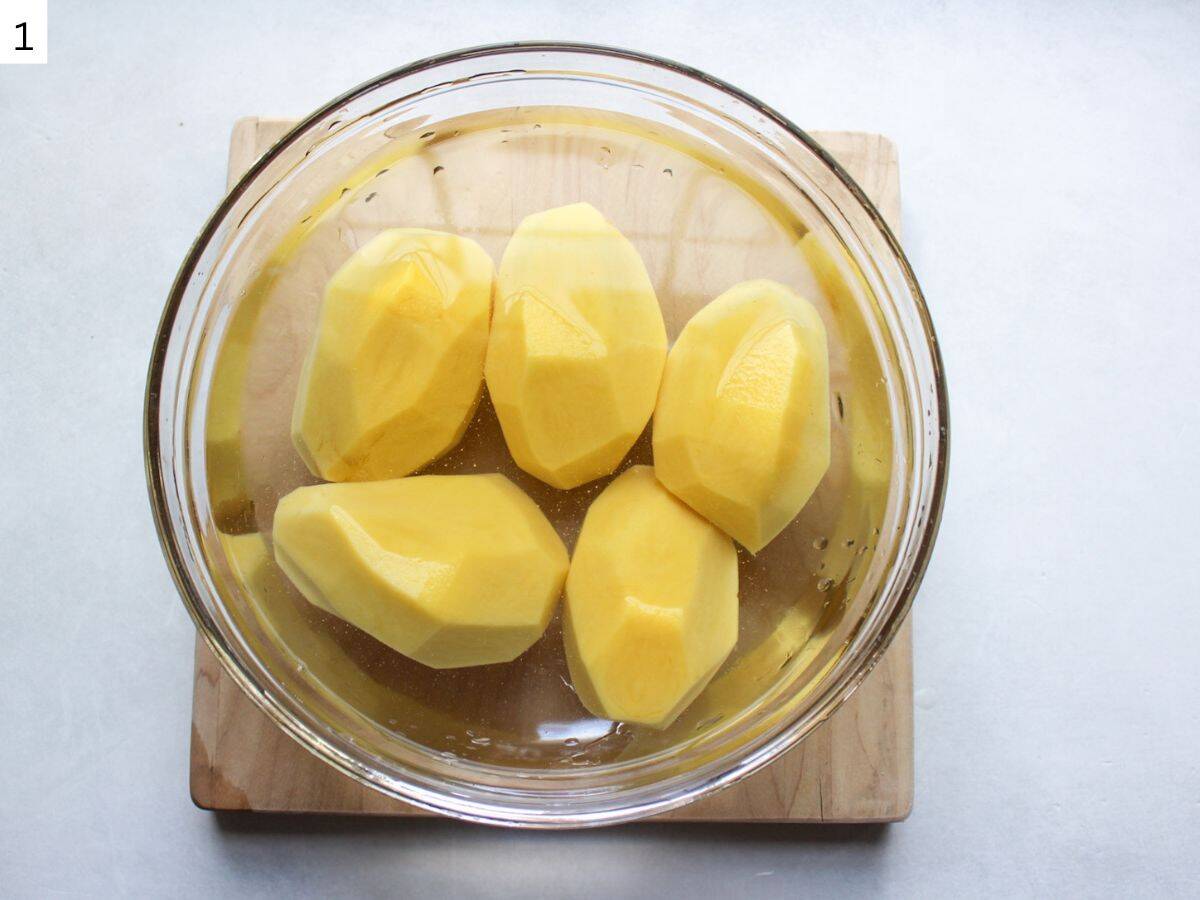
For the creamiest classic mashed potatoes, I peel my potatoes. I am a pro doing it with a knife, but you can also use a veggie peeler. I inspect each potato and cut out any dark spots, eyes, or blemishes to keep the flavor clean and the texture consistent.
Note: Some prefer leaving the skin on, it is up to you. I prefer my mashed potatoes creamy and smooth.
After peeling, I rinse them well under cold water. Then, I fill the bowl with water to keep them there while I cube them.
Cut the potatoes for boiling
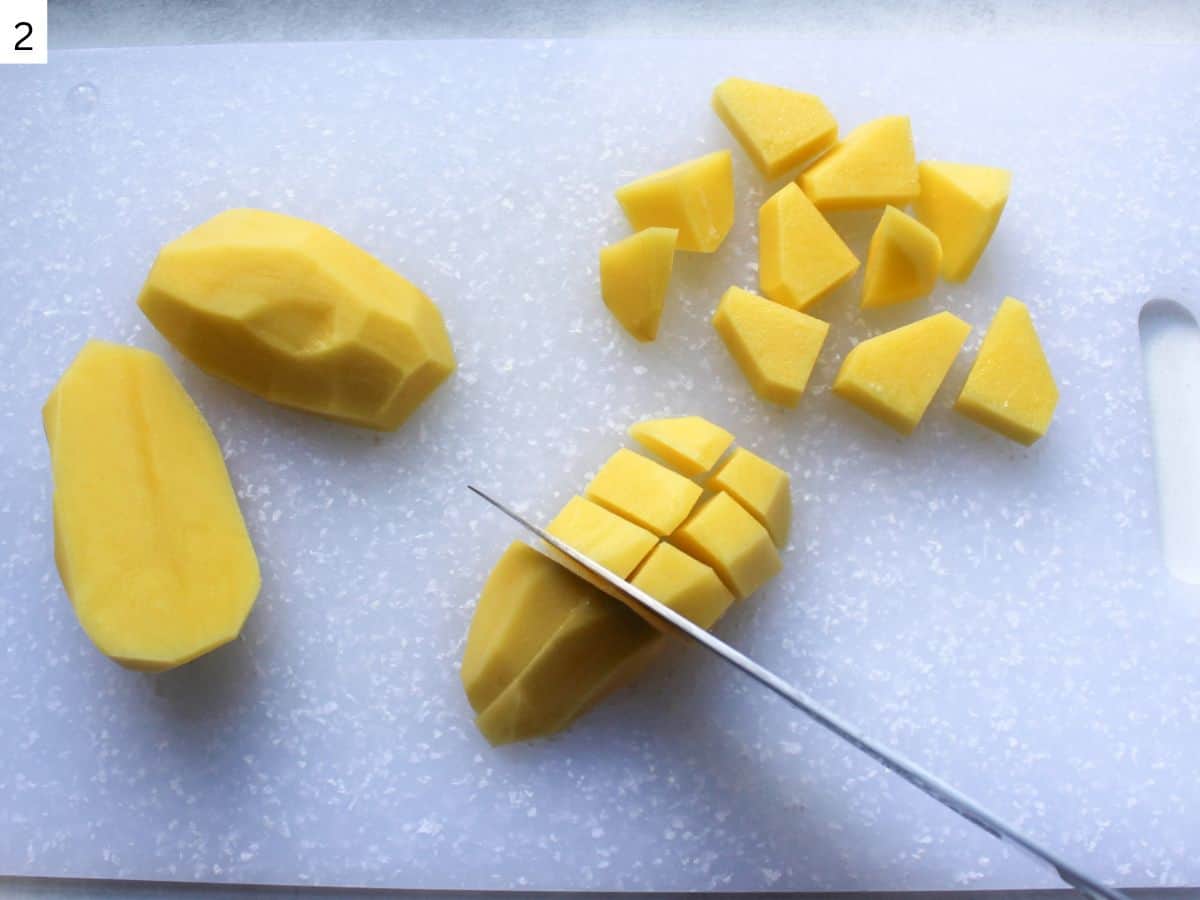
I cut them into 1.5-2 inch chunks for even cooking. Do not cut them too small thinking they will cook faster. Too small chunks will become water after cooking.
Salt the water properly
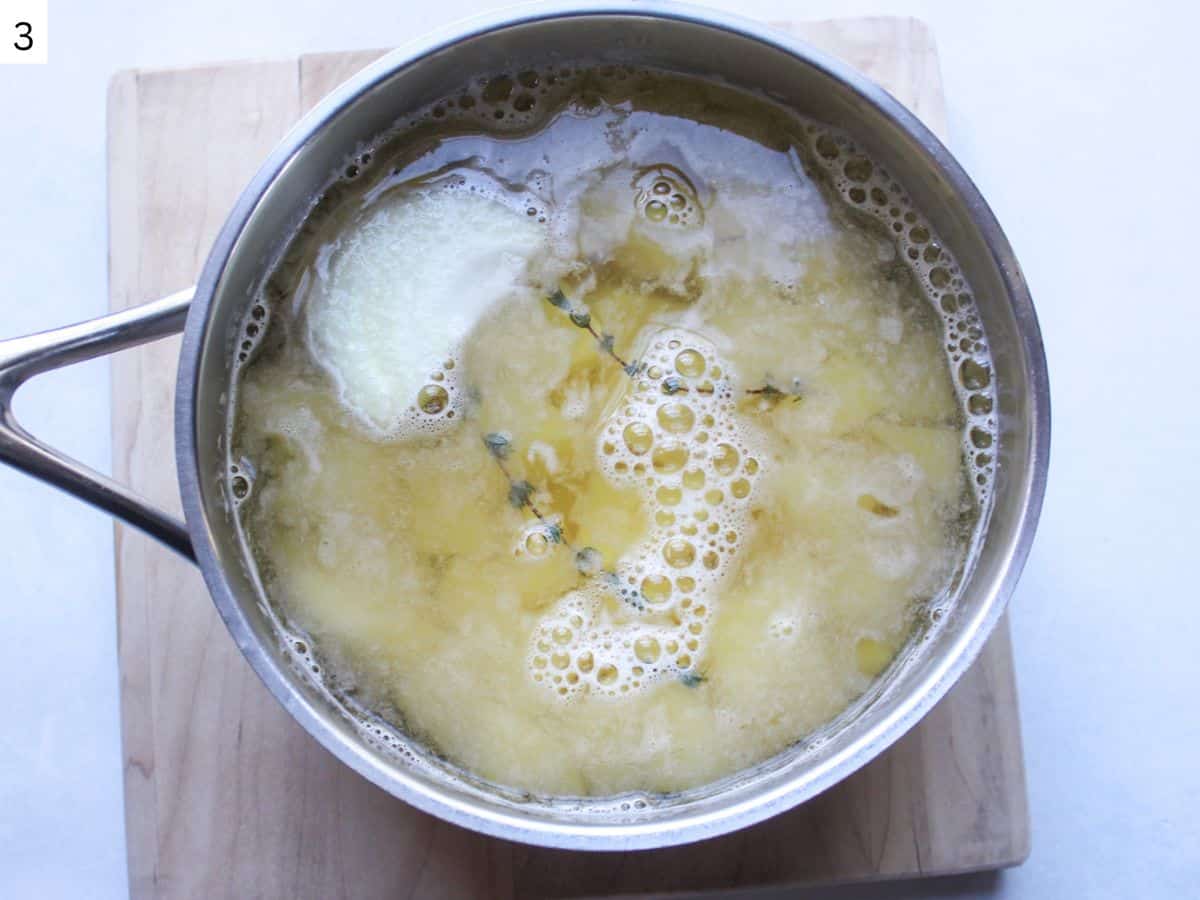
Add cubed potatoes to the large pot. I like to use the one that has thick bottom. Add enough water to cover the potatoes. Salt the water well. Just like Italians salt water for pasta, Eastern-Europeans salt water for the potatoes. I also add a quarter of the onion and a very small sprig of thyme. My mom always added the onion, it's quite core memory now for me. As for thyme, it is my addition. But make sure not add a lot of fresh herbs, as the flavor will be too strong.
Cook until perfectly tender
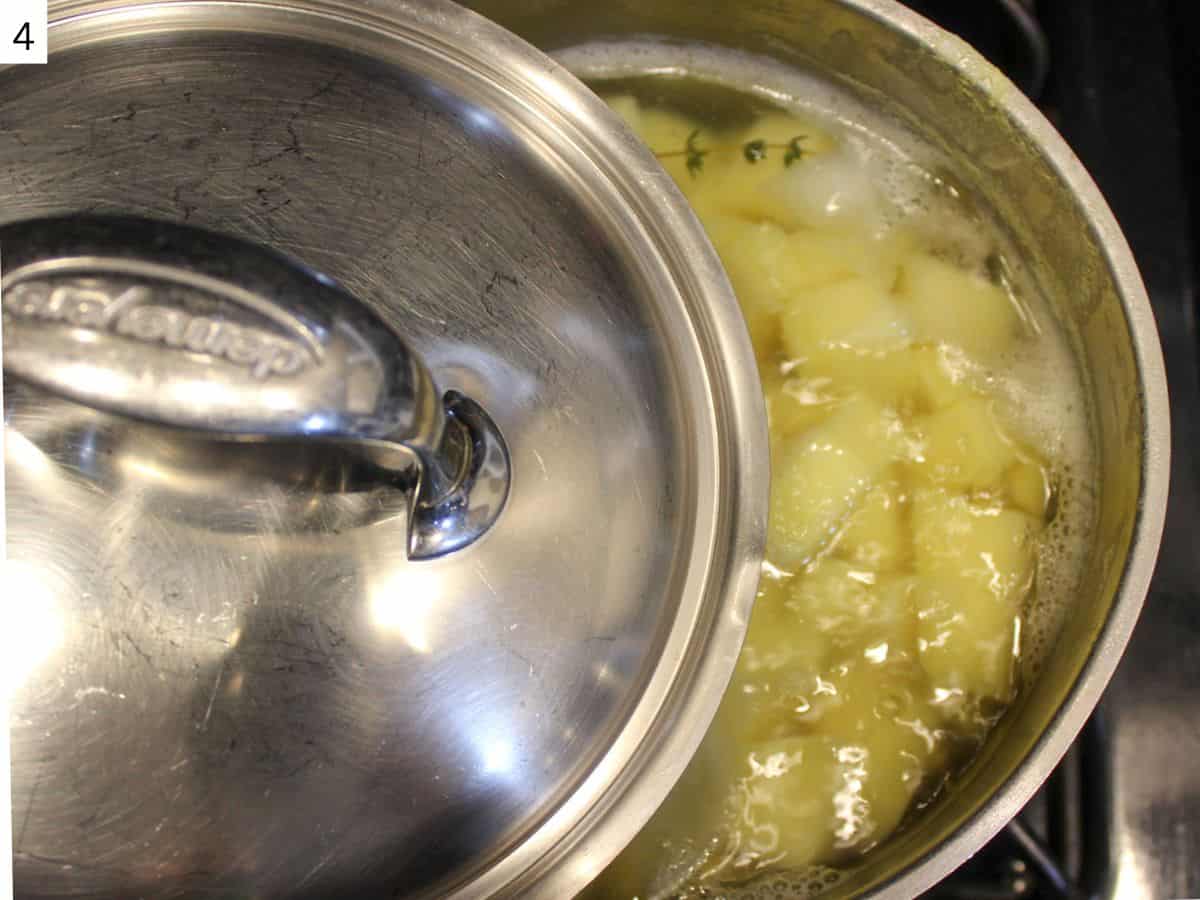
Bring the potatoes to a boil, turn heat medium and cook until perfectly tender. I like to half cover them with a lid as they cook, so the top pieces cook evenly but the water will not overflow. They are ready when a fork slides in easily with no resistance and they almost start falling apart.
Once cooked, drain the water and return the potatoes to the pot. Discard the onion and thyme. If the bottom of the pot is thick, the residue heat will steam dry the potatoes. If not, you can turn the heat back to low for a few minutes. Dry potatoes are important for creamy mash.
Don't overwork the potatoes
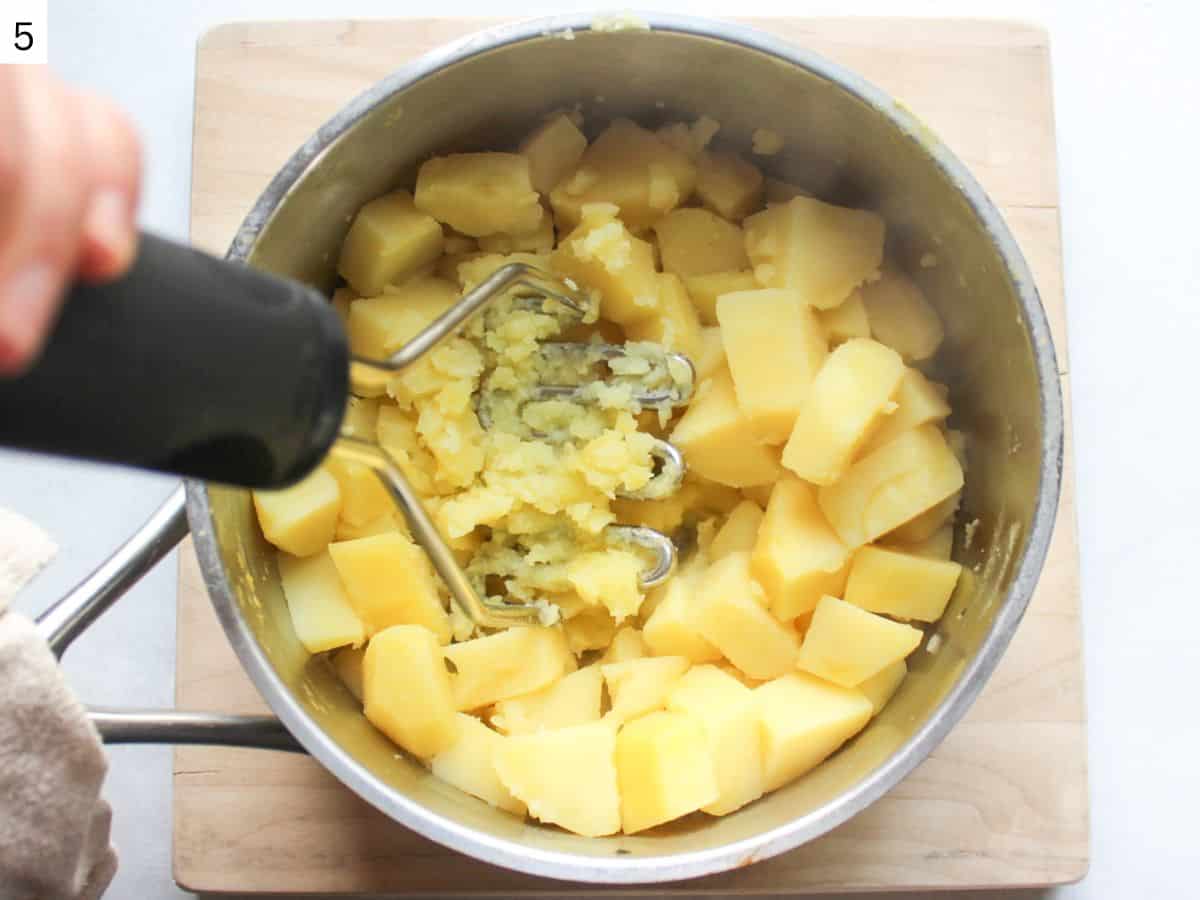
Once they dry, mashed them with the potato masher. I use the stainless steel wire style masher. You can also use the one with wholes of the wooden one. You can also use ricer if you have one.
Mash the potatoes just until smooth. Overworking them will release too much starch and they will turn sticky instead of creamy. This is a reason why I do not recommend using a mixer or a blender.
Add butter and milk (or cream)
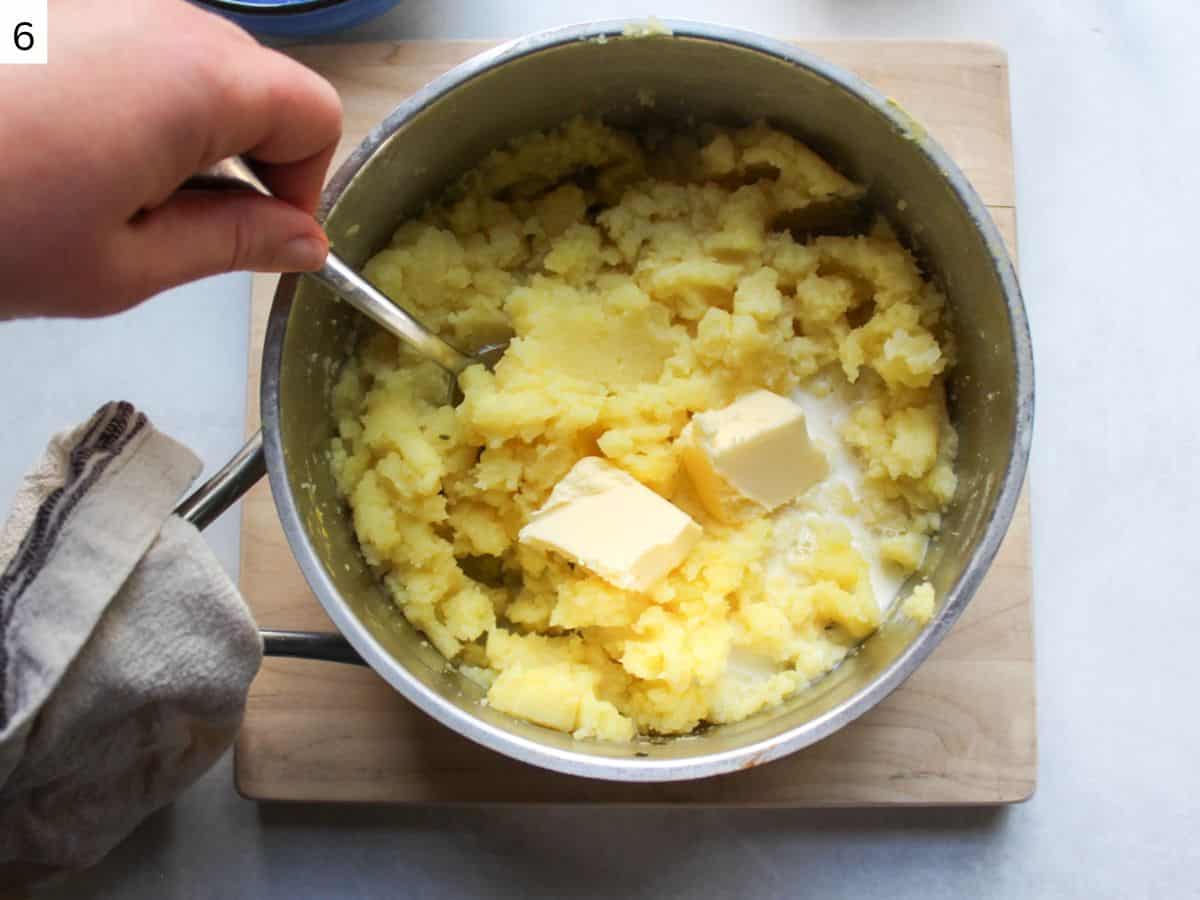
Now, you can remove the potato masher and use a spoon. Warm the milk in a microwave. You can use room temperature butter. If it is cold, warm it up in a microwave.
Add the butter first and mix it in until it fully melts. Now, add warm milk, little by little. Mixing it after each splash until you have the right consistency. The potatoes should be smooth, creamy, and soft enough to scoop easily with a spoon, but not runny.
Taste and adjust
After mixing, I always taste my potatoes. Most of the time, they need more salt. I also like to add a little bit of black pepper. You can also finish them with the extra knob of butter for even richer taste.
Mashed potatoes serving ideas
I am not gonna tell you what you can serve with mashed potatoes, as you mostly know that they go with the endless number of main dish. Instead, I would love to offer you a few of my main dished to different occasions.
- Roasted duck: The whole duck in roasted in oven bag ( you can use dutch oven too) with apples, prunes and finished with honey and soy sauce glaze. Perfect main dish for holidays like Easter or Christmas.
- Roasted whole chicken in oven bag: This is the recipe I make at least once a week. Perfect for an easy weeknight dinner, with plenty of leftovers to make the chicken noodle soup next day.
- Baked salmon fillets: These cook in 20 minutes. Very easy and family-friendly main dish to serve along the potato mash.
- Chicken Paprikash: If you are looking for an Eastern-European dinner, try this fall-apart (so tender!) chicken thighs simmered in a savory paprika sauce.
- Chicken Kyiv: Last but not least, try the Ukrainian-inspired dinner idea by serving your mashed potatoes with this chicken cutlet filled with herbed butter.
If you are interested in more of my chicken recipes, I have a whole category for easy and delicious chicken main dishes.
Recipe tips
- Use Yukon gold for the classic creamy mashed potatoes. Choose firm potatoes with no green parts or sprouts.
- Do not cut the potatoes too small for boiling, as they will become too watery. Aim for 1.5-2 inches chunks.
- Drain water and let the steam dry the potatoes before mashing.
- Mash just until creamy, do not overwork the potatoes to avoid sticky mash.
- Add warm milk or cream gradually, making sure you reach the right constancy.
- Always taste the potatoes to check if they need more salt, pepper, or butter.
How to store and reheat mashed potato leftovers
I'll be honest, not me or my family ever enjoy mashed potato leftovers. When it comes to the potato dishes, fresh is best. So, I try to cook as many as we usually eat. If we do have leftovers, I usually turn them into mash potato croquettes stuffed with cheese. I make them in my air fryer, I also bread them and they come out as good as fresh.
Otherwise, store mashed potato leftovers in an air tight container for up to 3 days.
Avoid reheating them in a microwave. Instead, add cold potatoes to the saucer pan, add a little bit of milk or cream and reheat them over low heat until warmed up thoroughly.
You can also freeze mashed potatoes for up to 2 months. For best results, spread them into a thin, flat layer before freezing. This makes them easier to store and perfect for using later in dishes like shepherd's pie.
Frequently asked questions
From my experience, Yukon gold are the best type of potatoes available in the US for making creamy, buttery and flavorful mashed potato. Some people like to use Russet (known as Idaho potatoes), but I think they are too light and starchy for making a classic creamy mash. Russet are best to baking.
Yes, if you have extra broth (chicken or beef) you can boil them in it. Broth will add the flavor and salt. You can also keep a little bit after draining the potatoes to add in place of milk or cream.
If your potatoes are gummy and sticky, you most likely overworked them. When you mash them too much, too much start will release and the texture will be not right. That's why, it is best to use regular masher or ricer and avoid the mixer.
No, I do not recommend using the mixer. It is too strong for mashing the potatoes. Using a mixer will them sticky (see question above why), glue-like.
If you add too much milk, gently heat them over the stove to let the excess moisture to evaporate until they reach your desired consistency. You can also add some thickening agent, such as a little bit if instant potatoes, grated cheese, or a few spoonfuls of cream cheese.
More popular potato recipes
📖 Recipe
Homemade Mashed Potatoes
Equipment
- 1 large or medium pot with a lid
- 1 colander
Ingredients
- 2 pounds Yukon gold potatoes
- 5-6 cups water
- ½ teaspoon salt
- 1 chunk onion about ⅛ of the whole onion
- 1 sprig fresh thyme optional
- 4 tablespoons unsalted butter
- ¼-½ cup warm whole milk
- ¼ teaspoon black pepper
Instructions
- Peel the potatoes, remove any dark spots or eyes. Cut the potatoes in 2 inch pieces.
- Add cubed potatoes to the large pot. Add the water, making sure it covers the potatoes. Add salt, a chunk of raw onion and a small sprig of fresh thyme.
- Bring it to a boil. If your pot is large, simmer it covered. If it is a medium pot, half cover the potatoes with a lid to prevent i from over boiling. Boil the potatoes for about 20-25 minutes or until fork tender and falling apart.
- Meanwhile, melt the butter. Warm up the milk. Use separate dishes.
- Drain the water and return the potatoes back to the pot. Discard the onion and thyme. Onions may fall apart during the boiling, so make sure to remove all the pieces. Let the heat from the pot steam dry the potatoes.
- Mash the potatoes with the potato masher until smooth and creamy. It is important not to overwork the potatoes.
- Add melted butter and mix it with a spoon. Start adding warm milk, one splash at a time, stirring the potatoes. Add enough milk for the potatoes to be creamy to scoop but not runny.
- Taste the potatoes. Add more salt if needed. Add some black pepper. You can also add another tablespoon of butter at the very end for creamier and richer mashed potatoes.

Comments
No Comments